Five Years in the Orchard: Lessons in Apples and Weather
When we bought Pleasant Pond Orchard in 2020, we were enthusiastic but green. We knew we loved apples but didn’t yet understand how different growing apples is from planting a garden or raising vegetables. Five seasons later, the orchard has been our teacher, and the lessons keep coming.
From IPM to Biodynamics
At first, we relied on Integrated Pest Management (IPM), a system that balances chemical and biological controls. Over time, we wanted to lean harder into practices that work with natural cycles, so we began transitioning toward biodynamic methods. That shift has required us to think differently about the orchard—less about controlling outcomes and more about creating conditions where the trees can thrive.
Annuals vs. Perennials
With annual crops like spinach, there’s room for recovery. If a crop fails, you can plant again within the same season. Apples aren’t so forgiving. Trees set their course once a year. A hailstorm, a late frost, a stretch of cold rain when bees should be flying—all can erase an entire harvest. Worse, the trees make decisions about the following year’s fruit in real time, based on stress, water, and weather. Drought this year doesn’t just mean fewer apples in 2025; it can mean a reduced crop in 2026.
This Year’s Story
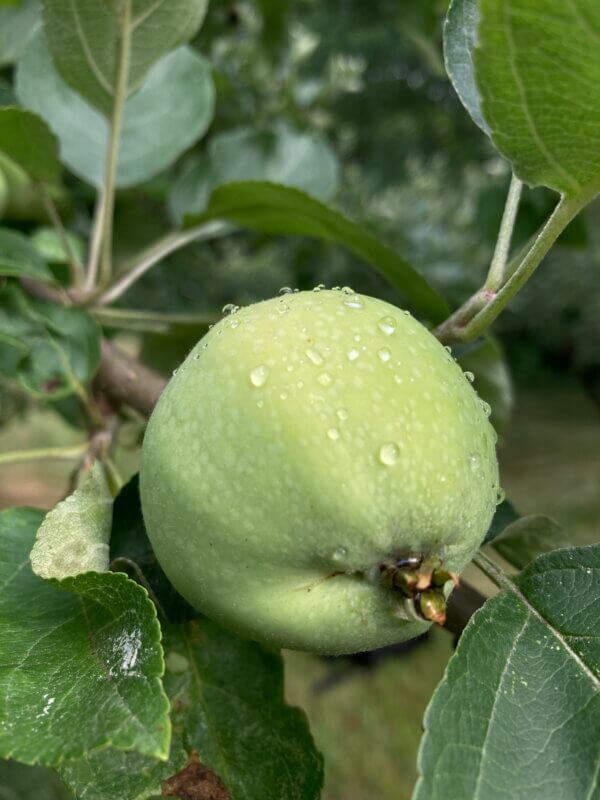
Spring 2025 was unusually cold and wet during bloom. That timing was disastrous for pollination. Even though our orchard had a decent return bloom, the pollinators weren’t flying enough to spread pollen. The result? Trees that should carry bushels of apples now have six or eight individual fruits. Out of forty Empire trees, we have not found a single apple. And with fruit so scarce, insect pressure intensifies on what little is available.
Rolling with It
It would be easy to get discouraged, but we still love it. The orchard continues to draw us in, to teach us resilience and patience. We hope to have enough apples to press a bit of cider this fall. Meanwhile, we’re leaning on another strength: the kitchen. Beginning Labor Day weekend, we’ll keep our shop open on Saturdays, offering baked goods to keep the orchard’s spirit alive.
Five years in, we’ve had a bumper crop, complete crop failures, droughts, and frosts—but also moments of joy, discovery, and connection. Pleasant Pond Orchard is still very much a work in progress, and that’s exactly how we plan to keep it.